


AI and Technology Innovation: The New Growth Engine for Insurance and Beyond
The insurance industry stands at a fascinating crossroads. While artificial intelligence transforms organizations across every sector, insurers face a unique challenge that technology promises to solve. The question isn't whether AI will reshape business—it's already happening. The real question is how companies can harness these innovations to unlock sustainable growth in an increasingly complex marketplace.
Recent findings from McKinsey's 2025 Global AI Survey reveal a striking pattern: nearly nine out of ten organizations now use AI regularly, yet most struggle to translate experimentation into enterprise-wide value. Meanwhile, the insurance sector grapples with its own growth paradox. After years of inflation-driven premium increases, insurers now confront a sobering reality—traditional growth levers are losing their effectiveness, and the path forward demands genuine innovation rather than simple price adjustments.
The Current State of AI Adoption
The AI landscape has matured considerably since generative AI burst onto the scene three years ago. Organizations aren't just experimenting anymore; they're deploying AI across multiple business functions. The numbers tell an encouraging story: 88 percent of survey respondents report regular AI use in at least one business function, up from 78 percent just a year ago. Half of organizations now use AI in three or more functions, signaling a genuine broadening of AI integration.
But here's where it gets interesting. Despite widespread adoption, most companies remain stuck in what experts call the "pilot purgatory." Nearly two-thirds haven't begun scaling AI across their enterprises. They're experimenting, testing, and piloting—yet the leap to transformative, organization-wide implementation remains elusive for most.
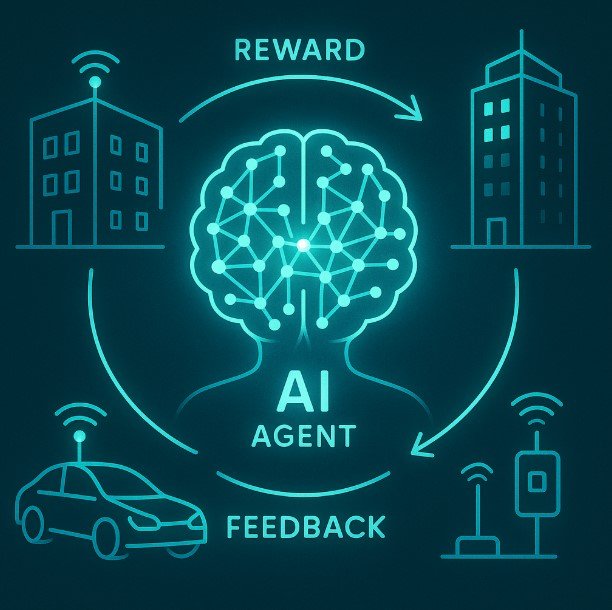
The emergence of AI agents represents the next frontier. These sophisticated systems, capable of planning and executing multiple workflow steps autonomously, are already being explored by 62 percent of organizations. However, widespread scaling remains rare. In any given business function, fewer than 10 percent of companies have successfully scaled AI agents. Technology, media, telecommunications, and healthcare sectors lead this adoption curve, with IT and knowledge management seeing the most intensive agent deployment.

The Innovation Gap: Where AI Delivers Value
One of the survey's most revealing findings centers on impact measurement. While 39 percent of respondents attribute some level of EBIT impact to AI, most report less than 5 percent contribution. This modest financial impact doesn't mean AI isn't delivering value—it's just showing up differently than many executives expect.
The real wins appear in qualitative outcomes. A majority of organizations report improved innovation capabilities thanks to AI. Nearly half cite enhanced customer satisfaction and competitive differentiation. These benefits matter enormously, even if they don't immediately translate into bottom-line numbers that make CFOs smile.
Specific use cases demonstrate clearer returns. Software engineering, manufacturing, and IT functions report notable cost benefits from AI deployment. On the revenue side, marketing and sales, strategy and corporate finance, and product development see the most substantial gains. The pattern suggests AI excels at augmenting human creativity and decision-making in contexts requiring nuance, strategy, and customer understanding.
What Separates High Performers from the Rest
Perhaps the survey's most actionable insights come from analyzing the 6 percent of organizations classified as "AI high performers"—those attributing 5 percent or more of EBIT to AI and reporting significant value creation. These outliers share several distinguishing characteristics that other organizations can learn from.
First, high performers think bigger. They're three times more likely than their peers to view AI as a catalyst for transformative change rather than incremental improvement. While most organizations focus exclusively on efficiency gains, high performers pursue multiple objectives simultaneously: efficiency, growth, and innovation.
Second, they fundamentally redesign workflows. This distinction carries enormous weight. High performers are nearly three times more likely to redesign individual workflows when implementing AI. They don't simply layer AI onto existing processes; they reimagine how work gets done. This intentional redesign contributes more to business impact than almost any other factor tested in the research.
Third, leadership matters profoundly. High performers are three times more likely to have senior leaders who demonstrate genuine ownership and commitment to AI initiatives. These leaders don't just approve budgets—they actively champion adoption, model AI use themselves, and maintain visible engagement throughout implementation.
Fourth, high performers invest more aggressively. More than one-third commit over 20 percent of their digital budgets to AI technologies, compared to much smaller allocations among other organizations. This investment enables faster scaling: about three-quarters of high performers have scaled or are scaling AI, compared to one-third of others.
Finally, high performers advance further with AI agents. In most business functions, they're at least three times more likely to have reached the scaling phase with agentic systems. This suggests that organizations extracting the most value from AI are also the quickest to embrace emerging capabilities.
The Insurance Industry's Growth Challenge
While AI transforms the broader business landscape, the insurance industry faces its own distinct pressures. After benefiting from inflation-driven premium increases, insurers now confront diminishing returns from traditional growth strategies. Recent analysis from Deloitte projects non-life premium growth at less than half its recent historical rates across European markets.
This growth headwind creates an urgent need for alternative strategies. Simply raising prices no longer works when inflation normalizes and market competition intensifies. Insurers must find new ways to expand their customer bases, launch innovative products, and tap into previously unprofitable market segments.
Technology offers several promising solutions to this growth challenge. Embedded insurance represents one particularly compelling approach. By enabling non-insurance players—eCommerce platforms, marketplaces, service providers—to distribute insurance products seamlessly, companies can unlock entirely new distribution channels. This model meets customers where they already are, at the precise moment when insurance coverage becomes relevant to their purchase or activity.
The economics prove especially attractive for products with small premiums that traditionally couldn't support high distribution costs. Technology-driven efficiency transforms previously unprofitable market segments into viable growth opportunities. When a platform can offer trip cancellation insurance at the point of booking, or device protection during online checkout, the marginal cost of distribution approaches zero while the customer experience improves dramatically.
Technology as the Innovation Accelerator
Beyond distribution, technology platforms now enable insurers to launch new products with unprecedented speed. This capability directly addresses what Harvard Business School Professor Clayton Christensen famously identified as the "innovator's dilemma"—the structural challenge that prevents established companies from successfully innovating.
Christensen's research identified two viable paths for incumbents: launching new products to existing customer bases, or extending existing products toward new customer segments. Modern insurance technology platforms facilitate both strategies by dramatically reducing the time, cost, and risk associated with product launches.
Traditional product development in insurance could take 18 to 24 months from concept to market. Legacy systems, regulatory compliance requirements, and organizational inertia all contributed to slow, expensive launches that discouraged experimentation. Today's core platforms enable test-and-learn approaches that would have been impossible just a few years ago.
Insurers can now pilot new products or enter new segments with maximum flexibility and operational efficiency. If a pilot shows promise, the same platform can scale that initiative to handle millions of customers with appropriate business and regulatory reporting built in from day one. This dramatically lowers the cost of failure while accelerating successful innovations.
The Workforce Transformation Question
As AI capabilities expand, questions about workforce impact naturally arise. The survey reveals mixed expectations and considerable uncertainty. Looking back at the past year, a plurality of respondents observed little change in employee headcount due to AI implementation. Across most functions, fewer than 20 percent reported workforce reductions of 3 percent or more.
However, expectations for the coming year tell a different story. While a plurality still anticipates minimal change, 32 percent of respondents predict overall workforce reductions of 3 percent or more, and 13 percent expect increases of similar magnitude. Larger organizations are more likely to expect workforce reductions, while high performers anticipate meaningful change in either direction.
Interestingly, most organizations continue hiring for AI-related roles. Software engineers and data engineers remain in highest demand, particularly at larger companies. This suggests AI is shifting the composition of workforces rather than simply reducing headcount. Organizations need different skills to implement, manage, and derive value from AI systems.
The insurance industry faces similar dynamics. Technology platforms reduce the need for manual processing and routine customer service interactions. Simultaneously, they create demand for data scientists, AI trainers, customer experience designers, and product innovation specialists. The net impact on employment remains uncertain, but the shift in required capabilities is undeniable.
Managing AI Risks While Capturing Value
As AI adoption accelerates, organizations are becoming more proactive about risk mitigation. The share of companies addressing risks related to privacy, explainability, organizational reputation, and regulatory compliance has grown substantially since 2022. Back then, organizations managed an average of two AI-related risks; today that number has doubled to four.
The research shows a clear connection between experienced consequences and mitigation efforts. Organizations that have encountered problems are significantly more likely to implement protections against those specific risks. Inaccuracy tops the list as both the most commonly experienced consequence and the most frequently mitigated risk. Nearly one-third of all respondents report negative consequences stemming from AI inaccuracy.
High performers, despite—or perhaps because of—their more extensive AI deployment, report more negative consequences than their peers. They're particularly likely to cite issues with intellectual property infringement and regulatory compliance. However, they also work to protect against a broader range of risks, suggesting a more mature and comprehensive approach to AI governance.

The Path Forward
The convergence of AI capabilities and industry-specific challenges creates unprecedented opportunities for organizations willing to think ambitiously and act decisively. The insurance sector exemplifies this dynamic perfectly. Faced with growth constraints and changing market conditions, insurers can leverage technology to reimagine distribution, accelerate product innovation, and profitably serve previously inaccessible markets.
But success requires more than technology adoption. The high performers in McKinsey's research didn't succeed simply by implementing AI tools. They succeeded by fundamentally rethinking their operations, investing aggressively, securing leadership commitment, and maintaining focus on transformative outcomes rather than incremental improvements.
For insurance companies specifically, the combination of embedded distribution technology and modern core platforms offers a genuine path beyond the growth plateau. These technologies enable insurers to test new ideas quickly, fail cheaply when experiments don't work, and scale successfully when they do. This capability—the ability to innovate continuously and economically—may prove more valuable than any single product or channel.
The broader lesson extends across industries. We're moving beyond the era when simply adopting AI differentiated organizations. The new competitive frontier lies in how comprehensively companies integrate AI into their workflows, how boldly they reimagine their operations, and how effectively they capture value at enterprise scale.
Most organizations currently find themselves in the messy middle—using AI regularly but not yet realizing transformative impact. The experience of high performers illuminates the path forward: think bigger, redesign boldly, invest aggressively, and treat AI as a catalyst for transformation rather than just another technology tool. The companies that make this leap will define the next generation of industry leaders.
Conclusion
This comprehensive analysis examines the intersection of artificial intelligence adoption and industry-specific growth challenges, with particular focus on the insurance sector. Drawing from McKinsey's 2025 Global AI Survey and contemporary insurance technology insights, the article explores how 88% of organizations now regularly use AI, yet most struggle to achieve enterprise-wide value. The research identifies key differentiators among high-performing organizations, including transformative thinking, workflow redesign, leadership commitment, and aggressive investment. For insurers facing growth constraints after years of inflation-driven premium increases, technology platforms offer solutions through embedded distribution and accelerated product innovation. The article provides actionable insights on scaling AI effectively, managing associated risks, and navigating workforce transformation while capturing sustainable competitive advantage.
Make Your Business Online By The Best No—Code & No—Plugin Solution In The Market.
30 Day Money-Back Guarantee
Say goodbye to your low online sales rate!
Q: What percentage of organizations are currently using AI regularly?
A: According to McKinsey's 2025 survey, 88% of organizations report regular AI use in at least one business function, representing a significant increase from 78% just one year ago. However, only about one-third have begun scaling AI across their enterprises.
Q: What are AI agents and how widely are they being adopted?
A: AI agents are systems based on foundation models capable of autonomously planning and executing multiple workflow steps. Currently, 62% of organizations are at least experimenting with AI agents, though only 23% report scaling them within their enterprises. Adoption is most common in IT, knowledge management, technology, media, telecommunications, and healthcare sectors.
Q: Why aren't more companies seeing significant financial returns from AI?
A: While 39% of respondents report some EBIT impact from AI, most see contributions of less than 5%. The main barriers include remaining in pilot phases rather than scaling, failing to redesign workflows around AI capabilities, and focusing solely on efficiency rather than combining efficiency with growth and innovation objectives.
Q: What distinguishes AI high performers from other organizations?
A: High performers (representing about 6% of organizations) share several characteristics: they view AI as transformative rather than incremental, redesign workflows fundamentally, have strong leadership commitment, invest over 20% of digital budgets in AI, and pursue multiple objectives including efficiency, growth, and innovation simultaneously.
Q: How is AI expected to impact workforce size?
A: Expectations vary considerably. While a plurality expects minimal change, 32% of respondents predict workforce reductions of 3% or more in the coming year, and 13% expect increases of similar magnitude. However, most organizations continue hiring for AI-related roles, particularly software engineers and data engineers, suggesting a shift in workforce composition rather than simple headcount reduction.
Q: What specific growth challenges does the insurance industry face?
A: After benefiting from inflation-driven premium increases, insurers now confront normalizing inflation and market saturation. Deloitte projects non-life premium growth at less than half recent historical rates, creating urgent needs for alternative growth strategies beyond simple price increases.
Q: How can technology help insurers overcome growth challenges?
A: Technology enables insurers to unlock new distribution channels through embedded insurance, reach customers at relevant moments, make previously unprofitable small-premium products viable through efficiency gains, and launch new products rapidly through modern core platforms that support test-and-learn approaches.
Q: What are the most important AI-related risks organizations should manage?
A: The most commonly experienced consequence is AI inaccuracy (reported by nearly one-third of respondents). Other significant risks include privacy concerns, explainability challenges, organizational reputation issues, regulatory compliance, intellectual property infringement, and cybersecurity vulnerabilities. Organizations now manage an average of four AI-related risks, double the number from 2022.
Q: How should companies approach workflow redesign when implementing AI?
A: Rather than layering AI onto existing processes, high-performing organizations fundamentally reimagine how work gets done. This workflow redesign contributes more to business impact than almost any other factor. It requires questioning established procedures, involving frontline workers in redesign efforts, and being willing to abandon legacy processes that no longer serve the organization.
Q: What investment levels are necessary to succeed with AI?
A: While investment needs vary by organization size and objectives, high performers typically commit over 20% of their digital budgets to AI technologies. This level of investment enables them to scale effectively, with about three-quarters of high performers having scaled or actively scaling AI compared to one-third of other organizations.