

AI Adoption in Insurance: Scaling Up and Powering IoT-Enabled Risk Transformation
Introduction
In September 2025, BCG’s report confirms that the insurance industry has moved ahead of most others in adopting AI technologies — predictive, generative, analytic — but only a small fraction (≈7%) have successfully scaled for enterprise-wide impact. BCG
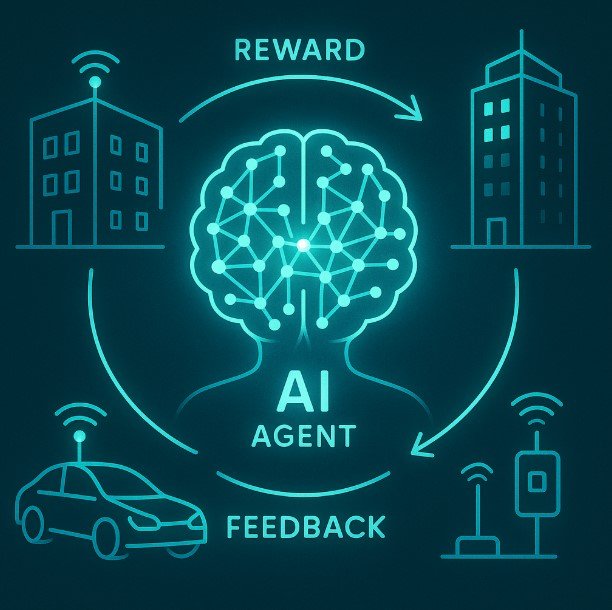
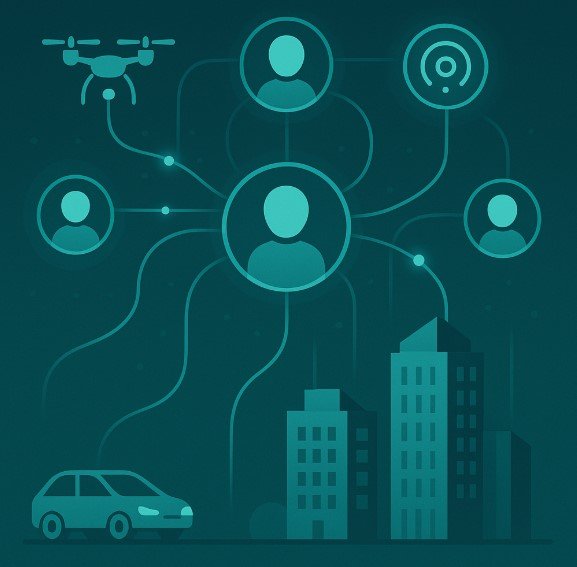
At the same time, IoT (Internet of Things) is transforming how insurers collect, analyze, and act upon data, enabling richer risk insights, operational efficiency, preventative policies, and improved customer trust.
This blog digs into the latest research, highlights what insurers must do to scale AI, and shows how IoT enablers can multiply the value. We’ll explore:
Current state and challenges of AI scaling in insurance
How IoT supports and accelerates AI adoption
Key global research & market trends
Use cases and implementation enablers
Q&A and what insurers need to act now
🧮 The State of AI Adoption in Insurance
From BCG:
The insurance industry has “deep data reserves, experience with analytics, and productivity gains,” making it well-suited for AI. BCG
Yet, while many projects are started, only ~7% of insurers have scaled AI broadly across the organization. BCG
Obstacles include culture, unclear roles, internal silos, resistance to probabilistic decision-making, and lack of consistent support at leadership levels. BCG
These findings are consistent with other global research: successful scaling requires more than technology—it requires change in processes, people, governance.
🌐 Global Research & Market Trends
IoT-Insurance Market Growth
According to Grand View Research, in 2023 the global IoT insurance market was estimated at USD 15.09 billion, projected to reach USD 91.75 billion by 2030 with a CAGR ~29.7%. Grand View Research
Another report projects even higher expansion, driven by demand for real-time risk assessment and prevention. Yahoo Finance+1
IoT Use Cases Expanding Rapidly
From smart homes (leak detectors, fire, intrusion sensors) to commercial property risk reduction (environmental sensors, occupancy, predictive maintenance). mtechzilla.com+2itransition.com+2
Underwriting and claims are major areas of benefit: faster, more accurate risk assessment; automated or semi-automated claims process; more preventive policies. itransition.com+1
Challenges: Privacy, Data Integration, and Infrastructure
Security, device reliability, privacy / regulatory compliance are repeatedly flagged as constraints. itransition.com+2Default+2
Integration across multiple IoT vendors & legacy systems is nontrivial. Also cost & return on investment (ROI) are concerns for many insurers.
🔧 IoT Enablers to Accelerate AI Scaling in Insurance
Here are enablers — the capabilities needed so insurers can scale AI effectively, leveraging IoT:
| Enabler | What It Means | Why It Matters |
|---|---|---|
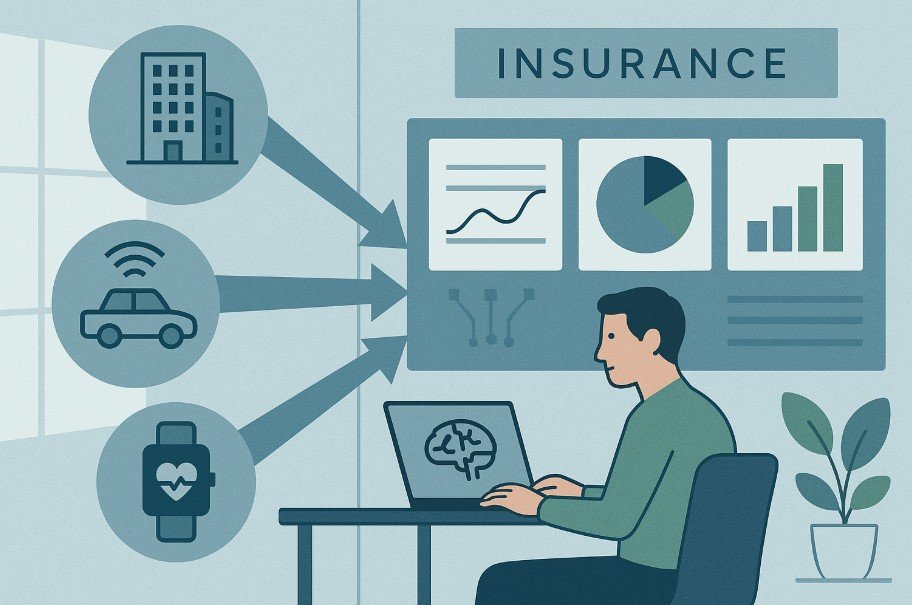
| Real-Time Sensor & Device Infrastructure | Installing, connecting, and maintaining sensors (physical or virtual) on insured assets: buildings, vehicles, wearables, machinery. | This provides continuous, granular data — crucial for predictive models, anomaly detection, and reducing lag. |
| Edge Computing & Network Reliability | Processing data close to source (edge) to reduce latency and bandwidth constraints; reliable connectivity (5G, IoT protocols). | Enables quick responses (e.g. in claims, preventive alerts), lowers costs and improves data quality. |
| Unified Data Platforms & Standard Protocols | Using open protocols (MQTT, Modbus, BACnet), standard data schema, and unified platforms so data from heterogeneous devices is normalized. | Prevents data silos; makes scaling easier; ensures consistency across assets and geographies. |
| AI & ML Integration with IoT Data Streams | Models built or retrained to use streaming data (not just historical batches) for predictions, anomaly detection, and decisioning. | This is how AI goes from proofs of concept to production-grade performance. |
| Governance, Privacy & Regulatory Compliance | Clear policies for data ownership, security, privacy (GDPR, others); audit trails; responsible AI practices. | Crucial for trust, legal compliance, and avoiding liability. |
| Cultural & Organizational Readiness | Leadership support, skilled workforce, cross-functional teams (IT, underwriting, operations), change management. | According to BCG, culture & leadership are gating factors in scaling AI. BCG |
🚀 Use Cases & Examples
Here are some concrete use cases combining AI + IoT in insurance, showing high leverage value:
Preventive Risk Monitoring in Commercial Real Estate
Sensors detect HVAC inefficiencies, moisture leaks, IAQ issues; AI models forecast risk of equipment failure; alerts trigger maintenance.
Results: energy savings, reduced claims for property damage, more accurate underwriting.
Telematics in Auto Insurance + Generative AI Claims Assistants
Vehicles transmit driving behavior, accidents, braking/acceleration metrics; AI agents help process first-notice-of-loss events.
Health & Life Insurance with Wearables
IoT wearables track health metrics; AI models combine with lifestyle data to design risk-based pricing and wellness incentives.
Smart Home / Property Insurance
IoT sensors for fire, water, smoke, structural movement; AI models assess risk and potentially adjust premiums or send proactive notices.
These use cases show that scaling AI with IoT can shift insurers from reactive to proactive models, improving risk control, lowering losses, and enhancing customer satisfaction.
🔎 How AI + IoT Helps to Overcome Scaling Challenges (Per BCG + Research)
Here’s how IoT helps address some of the major scale obstacles BCG identified:
| BCG-Identified Challenge | IoT-Driven Solution |
|---|---|
| Internal silos & unclear business engagement | IoT projects often require cross-team collaboration (IT / operations / risk / underwriting), helping break down silos. |
| Unclear roles / accountability | IoT systems require clearly defined SLAs, roles for data ingestion, model maintenance, alert response — thus forcing clarity. |
| Resistance to probabilistic/“uncertain” decisions | With IoT data and models, predictions are validated continuously, real-world feedback builds trust over time. |
| Limited value in pilots | IoT-enabled use cases often deliver value early (alerts, visible savings, preventable claims) — aiding momentum and justification to scale. |
| Cultural inertia, lack of leadership buy-in | Demonstrable IoT + AI use-cases (e.g. claims reduction, property risk prevention) give leadership real evidence; fosters culture of innovation. |
🧷 Key Recommendations for Insurers
If you're an insurer looking to scale AI with IoT enablers, here’s a roadmap:
Start with high-impact pilots in areas like underwriting, claims, property risk, or auto telematics. Ensure each pilot has metrics, budget, and leadership visibility.
Build IoT-ready platforms that support multiple device types, connectivity protocols, edge/cloud processing, and data normalization.
Invest in workforce upskilling, not just in AI modelers but also in operations, underwriting, claims, and sales — for handling IoT data flow, interpreting real-time analytics, and making decisions.
Establish good governance, privacy, and compliance frameworks from the start. Have clear data policies, security, audit trails, and align with regulatory requirements.
Measure and communicate value early and often. Use metrics like claims prevented, cost saved, risk reduced, operational downtime averted, premium accuracy improvement.
Ensure leadership commitment and cultural shift. Reward cross-team collaboration, risk taking, and allow for some failures as learning.
✅ Conclusion
The BCG article establishes a clear baseline: insurance has embraced AI broadly, but scaling is still rare. Integrating IoT enablers offers a powerful lever to cross that gap.
When insurers combine AI with continuous, real-time data from sensors and devices, standardized platforms, strong governance, and cultural change, the result is not just incremental gains — it’s a transformation toward proactive risk prevention, efficiency, better underwriting, and stronger ESG alignment.
For those insurers ready to act, the time is now. The difference between leaders and laggards will lie in execution, not intent.
📩 Interested in exploring AI + IoT pilots? Contact us at [email protected]. Let us help you build proof-points that scale.
Make Your Business Online By The Best No—Code & No—Plugin Solution In The Market.
30 Day Money-Back Guarantee
Say goodbye to your low online sales rate!
Q1: What is the difference between AI adoption and AI scaling in insurance?
A1: Adoption means running pilot or proof-of-concept AI projects; scaling involves integrating AI into core operations across functions, assets, or geographies so that value is consistent and sustained. BCG finds only ~7% of insurers have succeeded in scaling.
Q2: How does IoT support AI scaling?
A2: IoT provides continuous, high-fidelity data streams which make models more accurate, enable real-time decisioning, and reduce lag. This data is essential for predictive analytics, anomaly detection, risk prevention, and helps build confidence in AI outcomes.
Q3: What are the biggest risks when integrating IoT in insurance?
A3: Privacy & data security, data quality/reliability, interoperability of disparate devices, costs of hardware/deployment, regulatory compliance, and ensuring ROI. These must be addressed proactively.
Q4: What market trends support this combined AI + IoT shift?
A4: Large and fast-growing IoT insurance market (CAGR ~29–30%), expanding use cases (commercial property, auto, health), insurer pressure to reduce losses & improve customer experience, and regulatory demands for transparency.
Q5: How should insurers choose which use cases to invest in first?
A5: Pick areas with high data availability, clear financial metrics, and manageable risks — e.g. property claims prevention, telematics for auto insurance, or predictive maintenance in commercial real estate. These provide visible wins and build trust.