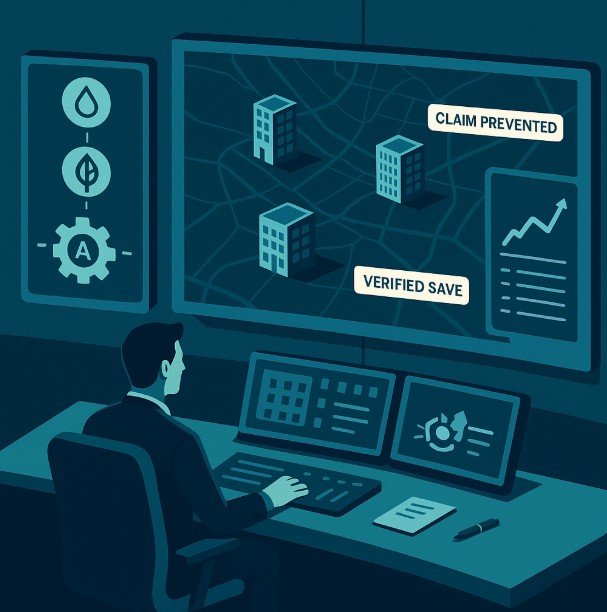
The Buildings Already Know the Risk — The Question Is: Who’s Listening?
How Zurich’s Safe AI Framework Validates the Insurmatics Vision for Intelligent Property Insurance
When Zurich Insurance Group — one of the world’s most sophisticated insurers in risk analytics and underwriting — publishes a framework on safe and responsible AI transformation, the insurance industry pays attention.
But Zurich’s recent perspective on AI governance is not merely a warning about the risks of automation. It is something far more important: a roadmap for the future of insurance.
And for companies operating at the intersection of IoT, property intelligence, and explainable AI, it also serves as a validation signal.
At Insurmatics, we have argued since day one that commercial property insurance remains fundamentally reactive. Insurers still underwrite buildings without having real-time visibility into what is actually happening inside them.
The data already exists.
It lives inside:
- HVAC systems
- Fire panels
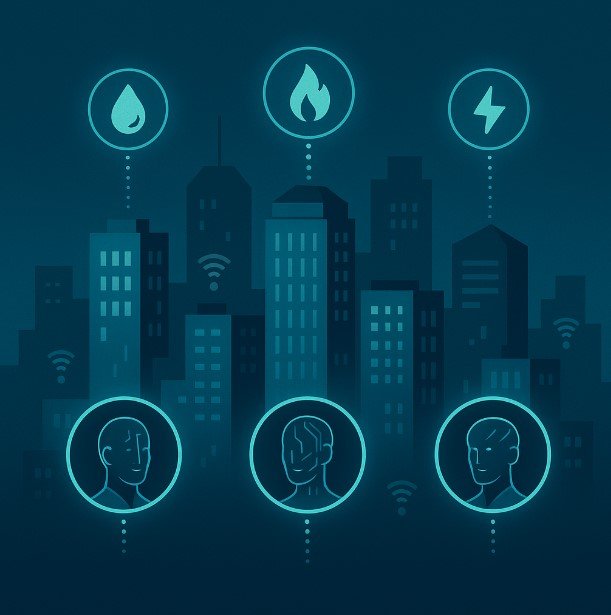
- Water monitoring infrastructure
- Environmental sensors
- Building Management Systems (BMS)
- Energy monitoring platforms
Yet in most cases, that data never reaches underwriting workflows in a usable, normalized, or actionable format.
The result?
Insurers are still pricing risk based on static inspections, outdated assumptions, and historical claims data — while the building itself is generating live operational intelligence every second.
That gap is no longer just a technology opportunity.
It is becoming a governance problem.
Property Risk Is Becoming a “Silent Exposure”
One of the strongest insights in Zurich’s AI framework is the comparison between AI risk and cyber risk — particularly the idea of .
In cyber insurance, organizations often carried massive unseen risk on their balance sheets long before they had the tooling to properly quantify or monitor it.
Commercial property insurance faces the same challenge today.
The moment an insurer underwrites a building without operational visibility, it accepts risks it cannot see:
- A hidden water leak developing behind a wall
- Electrical overheating inside aging infrastructure
- HVAC degradation slowly increasing fire probability
- Unsafe humidity conditions damaging critical assets
- Occupancy anomalies creating operational vulnerabilities
These are not hypothetical scenarios.
These are the exact losses being paid every day across global commercial property portfolios.
Industry estimates consistently suggest that a large percentage of commercial property losses could be prevented through proper IoT monitoring and predictive maintenance strategies. Yet many digital transformation initiatives still fail because building data remains fragmented across incompatible vendors, siloed dashboards, and disconnected protocols.
This is precisely the problem Insurmatics was built to solve.
From Fragmented Sensors to Underwriting Intelligence
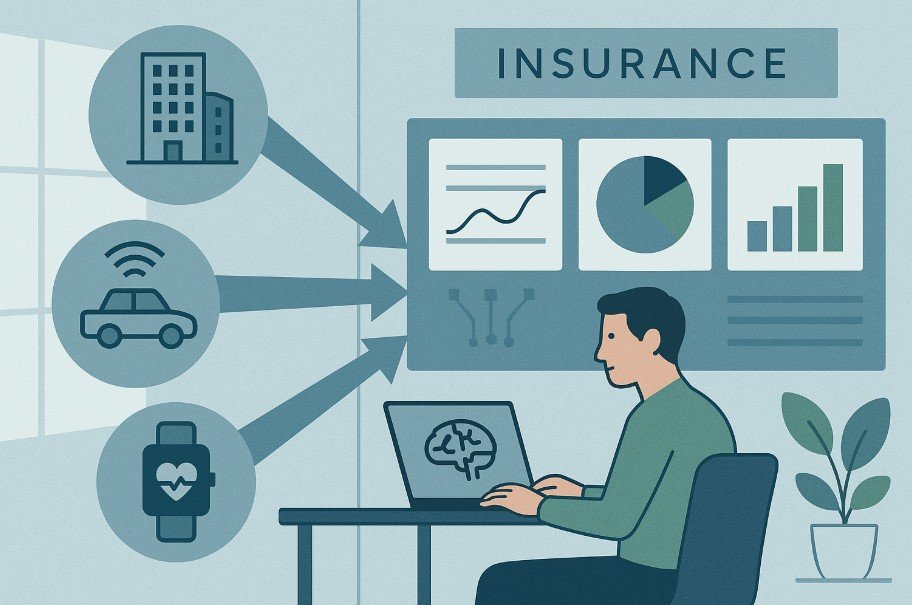
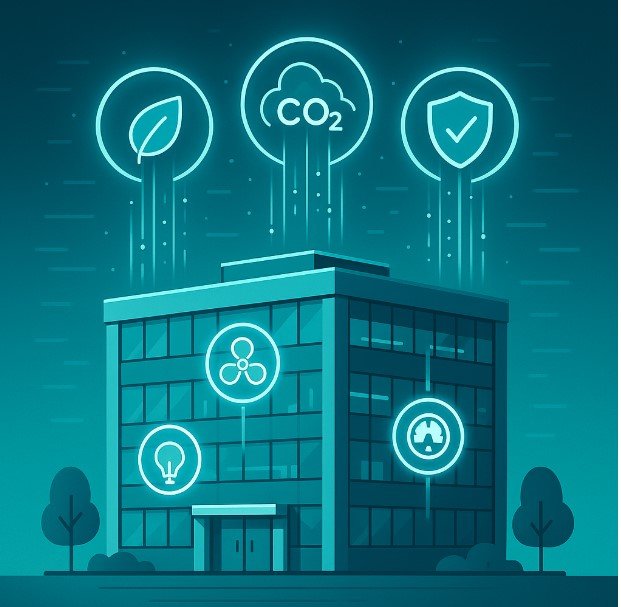
Insurmatics is developing a Building Intelligence Platform that converts fragmented IoT and BMS data into real-time insurance risk intelligence.
Instead of forcing insurers to deploy proprietary hardware ecosystems, the platform is designed to work across existing infrastructure using open protocols such as:
- MQTT
- Modbus
- BACnet
- Matter
- Environmental sensor APIs
- Building Management Systems
The core objective is simple:
Transform disconnected building telemetry into a single operational risk layer insurers can actually use.
Our architecture leverages the proprietary IBIS (Insurmatics Building Intelligence Schema) to normalize heterogeneous building data streams and feed them into explainable AI models capable of detecting anomalies and emerging operational risks in real time.
Rather than overwhelming insurers with raw sensor feeds, the system delivers:
- Real-time risk alerts
- Operational anomaly detection
- Predictive maintenance insights
- ESG and sustainability indicators
- Building-level risk scoring
- Audit-ready evidence trails
The insurer does not need to understand every underlying data protocol.
They simply need to know:
“Is this building behaving abnormally today?”
Explainability Is No Longer Optional
One of the most important themes in Zurich’s AI framework is transparency.
As AI systems become increasingly involved in underwriting, pricing, claims processing, and fraud analysis, regulators are demanding explainability and accountability.
This is especially important in Europe, where:
- GDPR establishes rights around automated decision-making
- The EU AI Act introduces risk-based AI governance
- Financial regulators increasingly scrutinize opaque algorithmic systems
If an AI-driven underwriting system flags a building as high risk, insurers must be able to explain:
- What triggered the alert
- Which data sources were involved
- Which thresholds were crossed
- Why the model produced that output
This is not just a compliance issue.
It is a trust issue.
At Insurmatics, explainability is treated as a core architectural principle — not a cosmetic feature added afterward.
Every risk flag generated by the platform can be traced back through:
- The originating sensor
- The anomaly pattern
- The operational deviation
- The timestamp sequence
- The contextual building conditions
This allows underwriters and risk engineers to interpret AI outputs rather than blindly accepting them.
The goal is not to replace human expertise.
The goal is to augment it with real-time operational intelligence.
ESG and Risk Intelligence Are Converging
Zurich’s framework also highlights a broader structural shift taking place across Europe:
ESG reporting, sustainability metrics, and operational building intelligence are rapidly converging.
This trend is being accelerated by:
- The EU CSRD framework
- ESRS reporting standards
- The EU Data Act
- Corporate decarbonization requirements
- Energy efficiency mandates
The key insight is simple but powerful:
The same sensor infrastructure that detects operational risk also generates sustainability intelligence.
A building monitoring platform that tracks:
- Energy consumption
- HVAC efficiency
- Water anomalies
- Equipment runtime
- Indoor environmental conditions
…can also produce:
- ESG indicators
- Carbon-related metrics
- Operational efficiency benchmarks
- Sustainability readiness scoring
This is the foundation behind ESG Lite, the sustainability layer developed by Insurmatics.
Rather than forcing SMEs and property operators to adopt entirely separate ESG reporting platforms, Insurmatics transforms existing operational building data into:
- ESG readiness insights
- Sustainability scoring
- Energy-saving recommendations
- CSRD-aligned reporting foundations
The same data stream powers both:
- Risk prevention
- Sustainability intelligence
That dual-use model creates strategic value for insurers operating in increasingly ESG-driven markets such as:
- The Netherlands
- Germany
- The Nordic region
- The Baltic ecosystem
Human-in-the-Loop Is the Future of Responsible Insurance AI
There is a misconception across parts of the insurance industry that AI success means eliminating human decision-making.
Responsible AI frameworks increasingly reject that idea.
Zurich’s principles emphasize the importance of human oversight in consequential insurance decisions — and we agree completely.
At Insurmatics, AI is not designed to replace underwriters or risk engineers.
It is designed to give them something they have historically lacked:
A live operational window into the buildings they insure.
The underwriter still decides:
- Whether to adjust premiums
- Whether to recommend mitigation measures
- Whether to trigger inspections
- Whether operational risks justify intervention
But now those decisions can be grounded in real-time building intelligence rather than static assumptions.
The AI does not replace the decision-maker.
It improves the quality of the decision itself.
Why the Timing Matters
Several macro trends are converging simultaneously:
Smart Building Adoption
The global smart building and IoT ecosystem continues to expand rapidly, driven by operational efficiency and resilience requirements.
Open Standards Are Winning
Open integration standards such as MQTT, BACnet, Matter, and Modbus are reducing vendor lock-in and making interoperable building intelligence far more practical.
Regulatory Pressure Is Increasing
CSRD, ESG reporting requirements, and AI governance frameworks are pushing insurers and property operators toward more transparent, data-driven operational models.
Prevention Is Becoming Strategic
Post-pandemic operational resilience has shifted insurer focus from purely reactive claims management toward proactive risk prevention.
The industry is moving from:
“How do we process claims faster?”
to:
“How do we prevent the claim from happening at all?”
That transition fundamentally changes the role of data inside insurance.
The Window Is Open — But Not Forever
The governance standards for AI-driven insurance are being shaped right now.
The companies deploying explainable, operationally grounded, and regulation-aware AI systems today will influence how the next generation of insurance infrastructure is built.
Those who wait for standards to fully mature before innovating may discover the market has already moved ahead without them.
At Insurmatics, we believe the future of commercial property insurance will be:
- Preventive instead of reactive
- Real-time instead of static
- Explainable instead of opaque
- Operational instead of purely historical
The buildings already know the risk.
The industry now needs systems capable of listening.
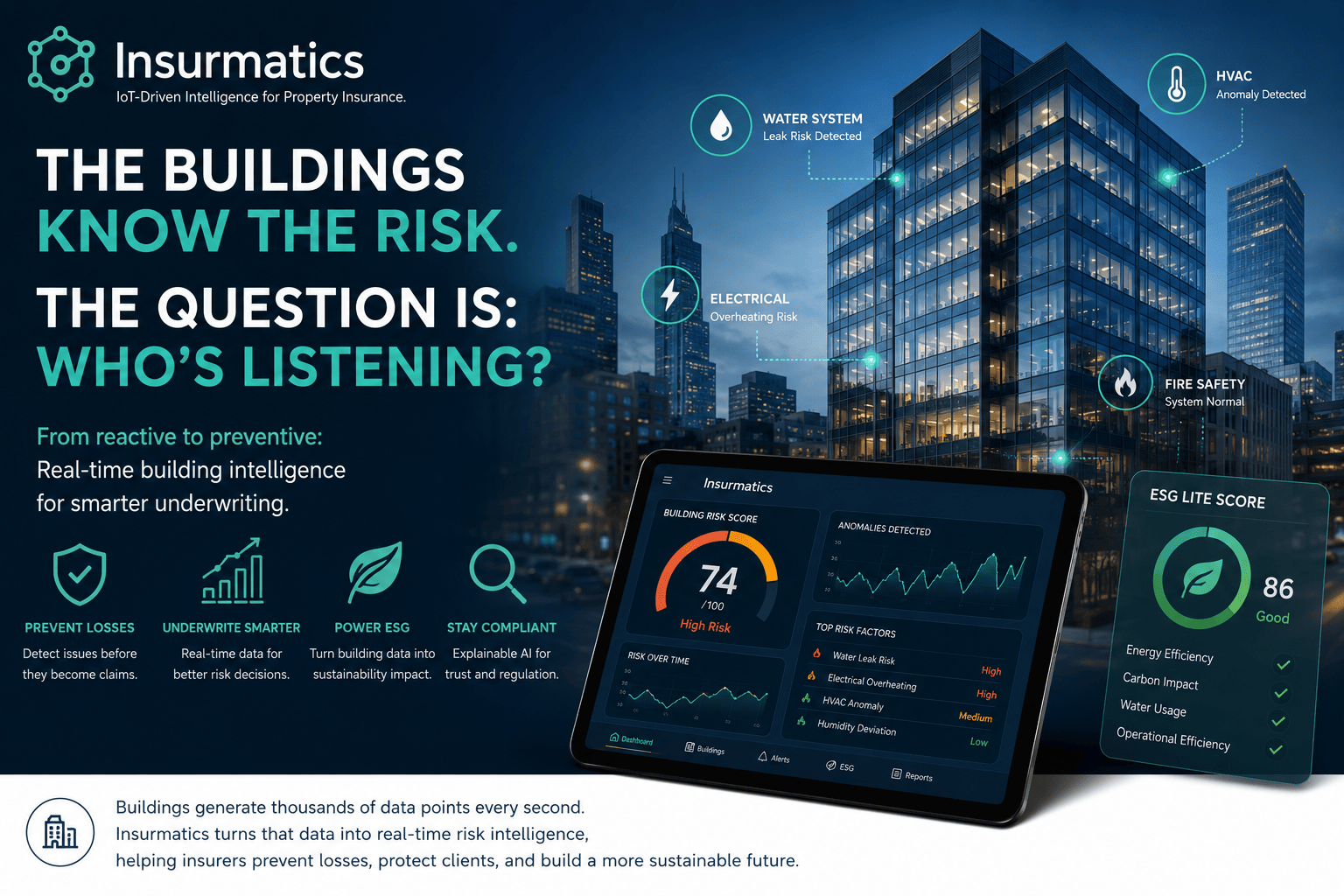
AI-powered building intelligence is transforming commercial property insurance from reactive claims handling to real-time risk prevention. Insurmatics combines IoT data, explainable AI, and ESG analytics to help insurers detect operational risks before losses occur.
About Insurmatics
Insurmatics is an InsurTech startup developing an AI-powered Building Intelligence Platform for commercial property insurance.
The platform transforms fragmented IoT and BMS data into:
- Real-time underwriting intelligence
- Operational risk alerts
- Predictive maintenance insights
- ESG and sustainability scoring
The company is focused on bridging the gap between building operations and insurance decision-making through explainable, regulation-aware AI systems.
📍 Located in Canada
🌍 Expanding into European insurance ecosystems
🔗 Official Website
🔗 LinkedIn Page
Make Your Business Online By The Best No—Code & No—Plugin Solution In The Market.
30 Day Money-Back Guarantee
Say goodbye to your low online sales rate!